

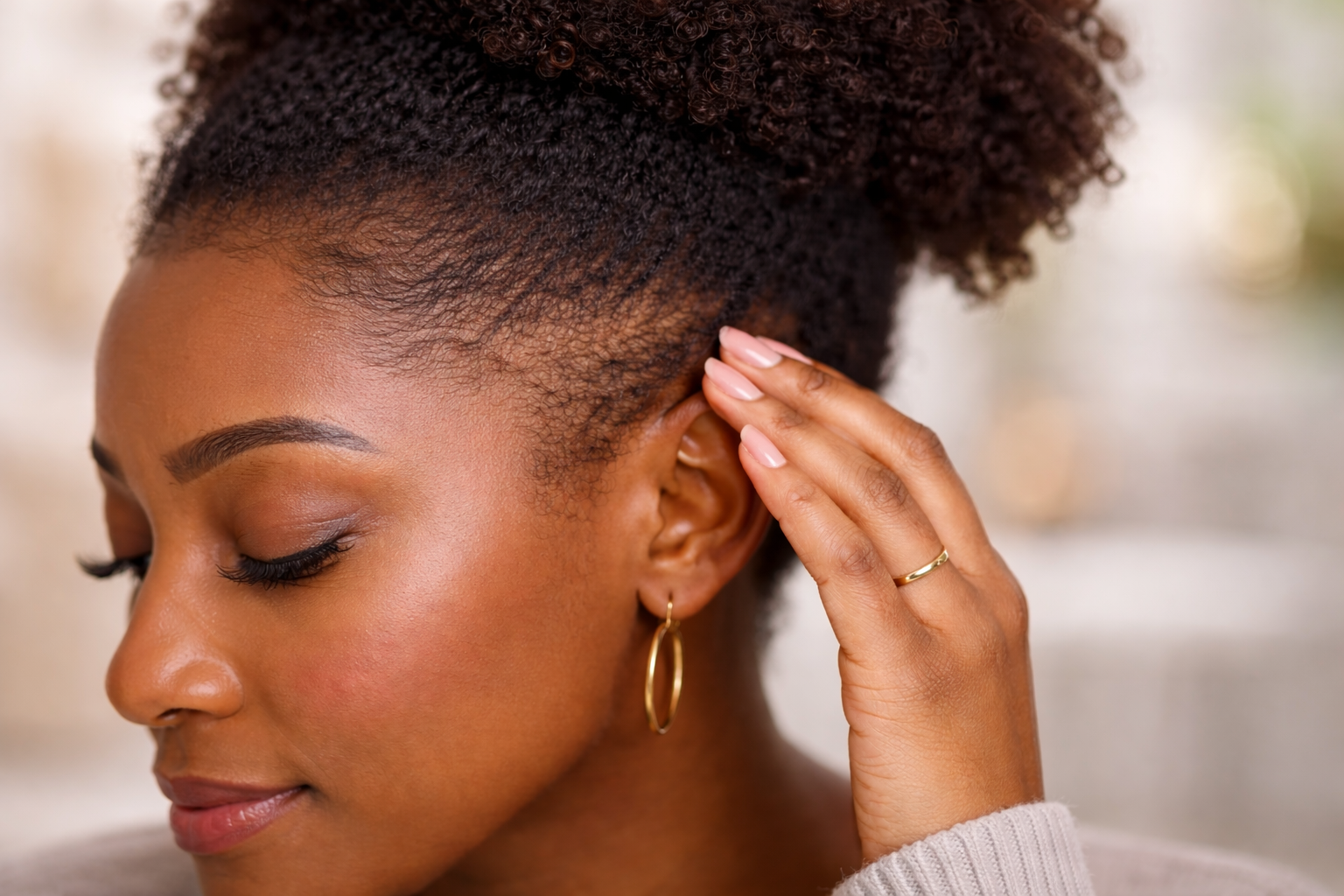
Your hairline isn’t weaker by accident.
It’s more delicate by design.
Why Your Hairline Is the First Place Damage Shows Up
The hair around your temples and edges is finer, less dense, and under more daily stress than any other part of your head. That's why changes often show up there first, even when the rest of your hair seems healthy.
Why Are My Edges Thinning?
Your hairline sits where several stressors meet:
Tension from styles
Frequent manipulation
Friction from scarves, bonnets, and hands
Finer, more delicate strands
Because of this, even habits that seem harmless can cause gradual damage over time.
Common Causes of Hairline Damage
Most hairline damage isn't caused by one big mistake. It builds up over time.
Common contributors include:
Tight ponytails, braids, wigs, or protective styles
Repeated slicking with gels or edge control
Excessive brushing or tension during styling
Hormonal shifts and stress
Inconsistent moisture around the perimeter
Over time, the hairline can become weaker, shorter, and slower to recover. Ongoing tension can also lead to a type of hair loss called traction alopecia, which should be evaluated by a dermatologist. If you wear protective styles often, read Why "Protective Styles" Aren't Always Protective.
Breakage vs. Shedding at the Hairline
This difference matters.
Breakage shows up as short, uneven pieces that don't grow past a certain point.
Shedding looks like full strands with a small white bulb at the end.
Many hairline concerns are breakage, not shedding, and breakage often improves once the cause is removed. For a full breakdown, read Hair Shedding vs. Breakage: What's Actually Happening and Why It Matters.
How Long Does It Take for Edges to Grow Back?
Hairline recovery is slower than other areas because the strands are finer and more sensitive.
Recovery requires:
Removing tension completely
Handling your edges as little as possible
Keeping the area consistently moisturized
Giving your hair time
There's no quick fix. Progress happens quietly, over months, not weeks.
How to Protect Your Edges and Help Your Hairline Recover
The goal isn't to force growth. It's to remove stress and support strength.
That looks like:
Looser styles, especially around the hairline
Fewer edge products and less slicking
Gentle handling during styling and takedown
Light, consistent moisture without buildup. A few drops of CÉCRED Nourishing Hair Oil along the perimeter is enough.
Less friction overnight with a silk or satin pillowcase and a knit sleep hair net instead of a tight band
Patience
When the environment improves, the hairline often follows.
When to See a Dermatologist About Your Hairline
If thinning continues after you've reduced tension and improved your care, it's important to rule out hormonal or medical causes.
A stylist can support your hair care. A dermatologist can identify what's happening underneath. Both play a role. Learn more in When Hair Loss Isn't About Hair Care: Stress, Hormones, and Internal Shifts.
What I Recommend
The products I use behind the chair and recommend to my clients for gentle, low-tension hair care are on my Salon Recommended page.
In Atlanta? Book your appointment.
This post is for educational purposes only and is not intended to diagnose or treat any medical condition. If you're experiencing persistent hair loss, thinning, or scalp concerns, consult a dermatologist or licensed medical professional. Some links in this post are affiliate links, and The Press Room may earn a commission. As an Amazon Associate I earn from qualifying purchases.