

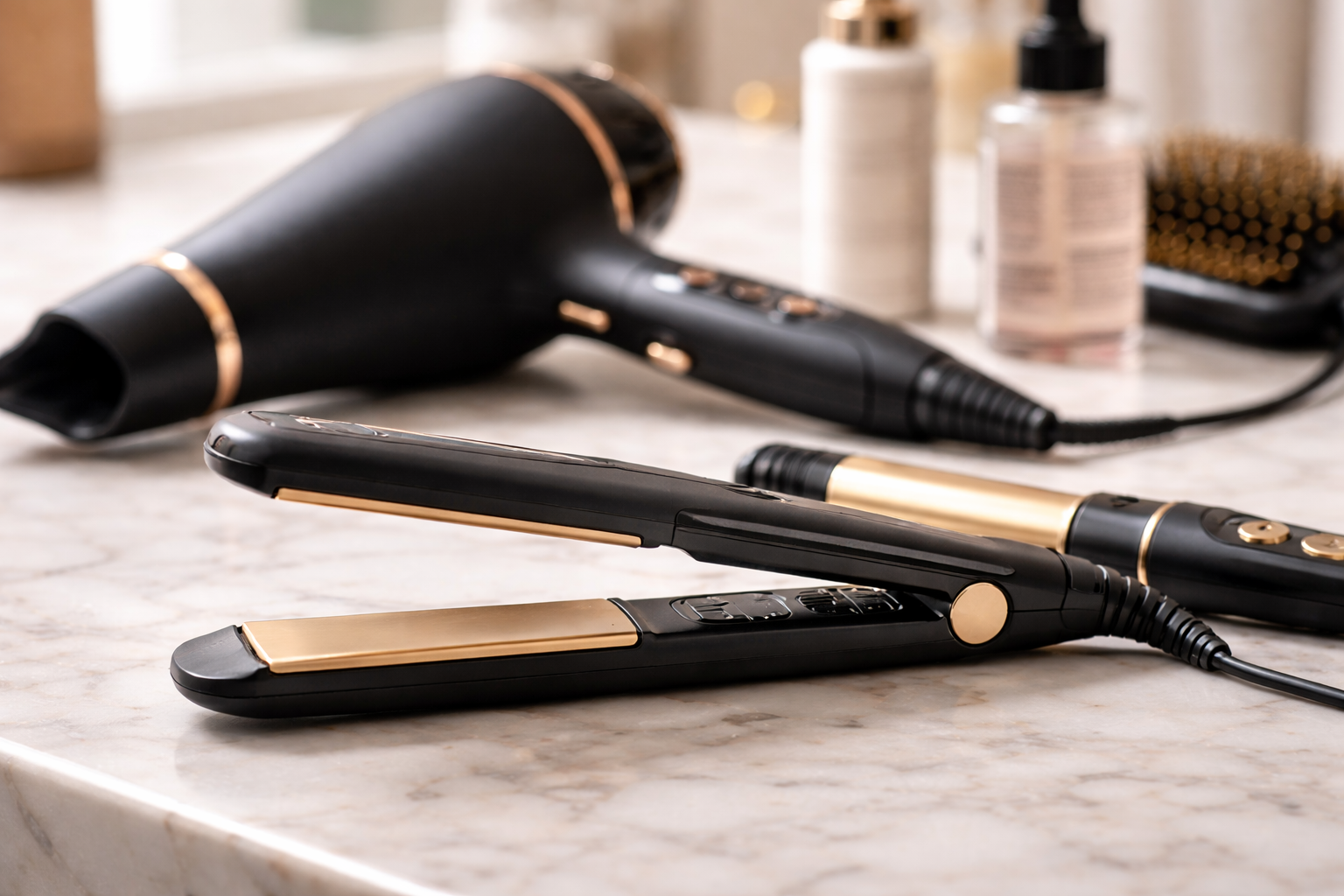
This image is the property of The Press Room Salon
For years, heat has been labeled the villain in healthy hair conversations. Flat irons, blow dryers, and curling tools all get grouped together as "bad."
But here's what most people don't hear enough:
Heat itself doesn't damage hair. Poor heat practices do.
I see clients avoid heat entirely and still struggle with breakage, dryness, and length retention. I also see clients who get regular silk presses and keep strong, healthy hair.
The difference isn't the tool. It's how the heat is used.
Does Heat Damage Natural Hair?
Heat temporarily changes the structure of the hair strand. Used correctly, it smooths the cuticle, makes hair more manageable, and gives you styling versatility, including a sleek silk press.
Damage happens when heat:
Is too hot for the hair's condition
Is applied repeatedly without protection
Is used on compromised or overly dry hair
Is layered on top of earlier heat damage
Heat is a tool. Like any tool, it helps or harms depending on how it's used.
Healthy Heat Styling vs. Heat Damage
Healthy heat use looks like:
Heat protectant applied evenly
The right temperature for your hair's density and condition
Fewer passes, done with intention
Clean, well-maintained tools
Hair that's properly moisturized and balanced beforehand
Heat damage happens when:
The temperature is turned up "just to get it straight"
Multiple passes make up for poor prep
Hair is styled while already compromised
Heat is layered on top of chemical damage without recovery time
For most people, heat damage isn't instant. It builds up over time. Read more in Understanding Cumulative Stress on the Hair Fiber.
Why Some Hair Tolerates Heat Better Than Others
Heat tolerance depends on:
Natural curl pattern and strand thickness
Chemical history, like color, relaxers, or keratin
Moisture and protein balance
Lifestyle, like workouts and sweat
How often heat is used
Two people can use the same flat iron and get completely different results. That doesn't mean one is doing it wrong. It means their hair needs different care.
Signs of Heat Damage in Natural Hair
Your hair may need a reset if you notice:
Ends thinning faster than usual
Loss of elasticity
Uneven reversion after washing
Dryness that doesn't improve with moisture
Styles not lasting like they used to
These aren't signs to give up heat entirely. They're signs to rethink how it's used. If your ends are thinning, Why Your Ends Determine Your Length explains what to look for.
How to Heat Style Without Damaging Your Hair
What I recommend as a stylist:
Use heat intentionally, not out of habit
Prep your hair properly every time, starting with a moisturizing cleanse like CÉCRED Hydrating Shampoo
Always use a heat protectant. I use CÉCRED Thermal Shield Mist in the salon.
Lower the temperature before you turn it up
Give your hair recovery time between heat services
Pair heat styling with consistent maintenance and trims
Healthy hair isn't about extremes. It's about balance.
The Bottom Line
Heat isn't the enemy of healthy hair. Misuse, overuse, and lack of knowledge are.
Used correctly, heat can actually support length retention by reducing daily manipulation, while keeping your hair looking and feeling its best.
If you've been afraid of heat, this is your permission to stop fearing the tool and start focusing on the method.
What I Recommend
The products I use behind the chair and recommend to my clients for healthy heat styling are on my Salon Recommended page.
In Atlanta? Book your silk press.
This post is for educational purposes only and is not medical advice. Hair health varies from person to person. For concerns related to hair loss or scalp conditions, consult a dermatologist or licensed medical professional. Some links in this post are affiliate links, and The Press Room may earn a commission.