

What Split Ends Actually Are (And Why They Matter More Than You Think)
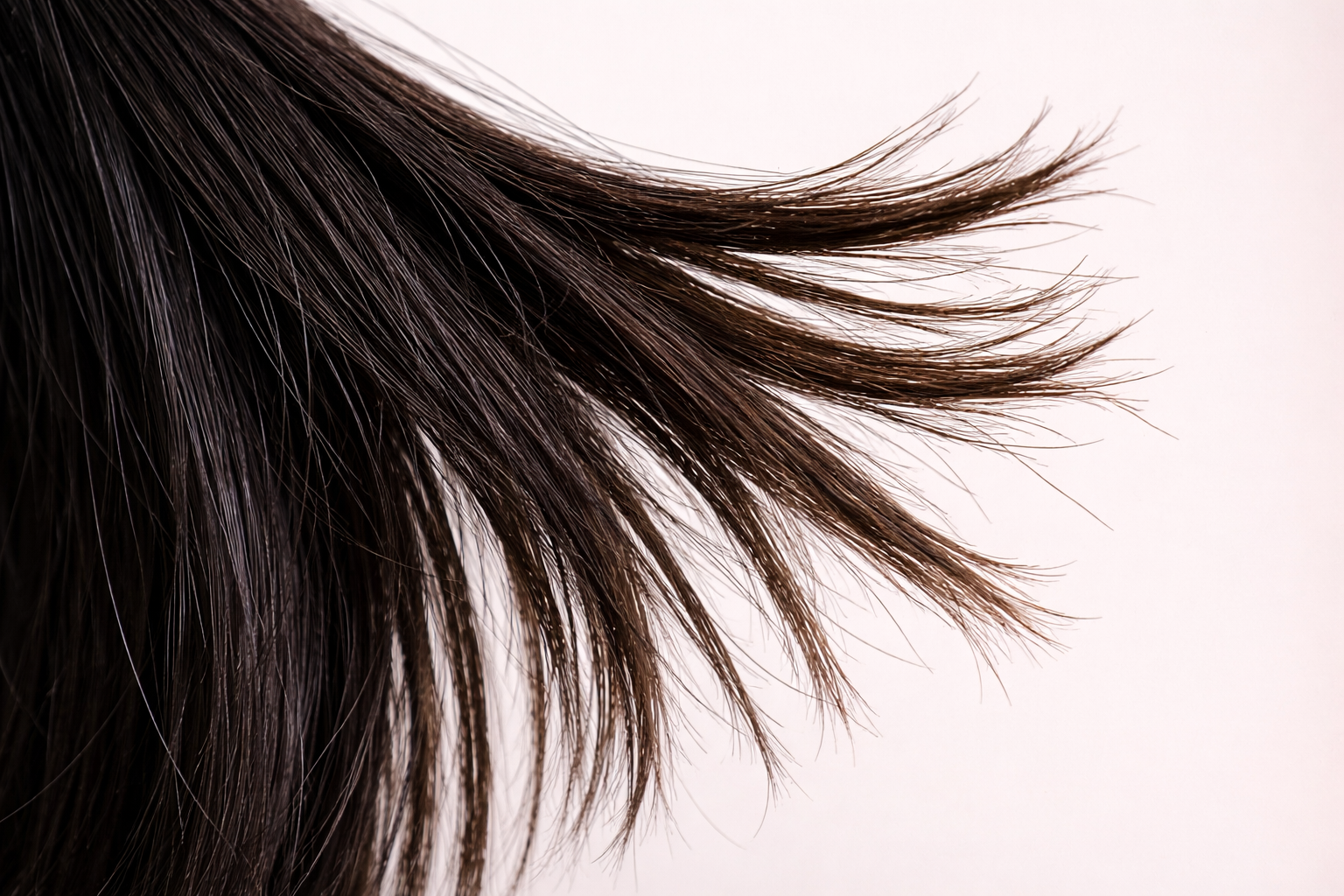
Split ends aren’t just frayed tips at the bottom of your hair.
They’re a structural breakdown of the hair fiber.
Each strand of hair is made up of layers. When the protective outer layer becomes compromised, the inner structure begins to separate. That separation is what we call a split end.
Once that split forms, it cannot be repaired. No product can fuse it back together.
This is where confusion often starts.
Why Split Ends Don’t Stay at the Ends
A split end doesn’t stay put.
If it isn’t removed, it continues to split up the hair shaft, weakening more of the strand as it goes. This is why hair can look long but feel thin, brittle, or uneven over time.
The longer split ends are ignored, the more length you eventually lose.
This is also why trims feel like they’re “cutting growth,” when in reality they’re protecting it.
What Causes Split Ends in the First Place
Split ends form from a combination of stress and exposure over time, including:
Heat styling without proper protection
Chemical services such as color or relaxers
Mechanical stress from brushing, tight styles, or extensions
Dryness and lack of moisture balance
Skipping trims for extended periods
Split ends are not a sign of failure. They’re a sign that hair has lived life.
Why Products Can’t Fix Split Ends
This part is important.
Products can temporarily smooth split ends so hair looks better. Oils, serums, and creams can improve appearance, softness, and manageability.
What they cannot do is reverse a split.
Think of it like a tear in fabric. You can lay it flat, but the tear is still there until it’s cut away.
How Often Hair Actually Needs a Trim
There is no universal schedule. Hair needs vary based on lifestyle, services, and maintenance.
In general:
Chemically treated or heat-styled hair benefits from trims every 8–12 weeks
Low-manipulation or natural styles may stretch longer
Clients actively growing length still need trims to prevent breakage
Trims are not about taking inches. They’re about removing damage before it spreads.
Why Skipping Trims Causes More Harm Than Good
One of the most common things I hear is:
“I’m trying to grow my hair, so I don’t want to cut it.”
Length retention only works when the ends are healthy.
Holding onto damaged ends leads to:
Thinning over time
Uneven breakage
Hair that appears stuck at the same length
Growth happens at the scalp. Retention happens at the ends.
The Press Room Approach to Length Retention
At The Press Room, trims are intentional. We’re not cutting hair just to cut it.
We assess:
Density
Ends condition
Chemical history
Styling habits
The goal is strong strands that can actually keep the length they grow.
The Bottom Line
Split ends are not cosmetic.
They are structural.
And ignoring them costs more length in the long run.
Healthy hair is proactive, not reactive.
Disclaimer:
This content is for educational purposes only and is not medical advice. Hair conditions, breakage, and retention vary by individual. For medical or scalp concerns, consult a licensed healthcare professional.