

Let's take the emotion out of this conversation and replace it with clarity.
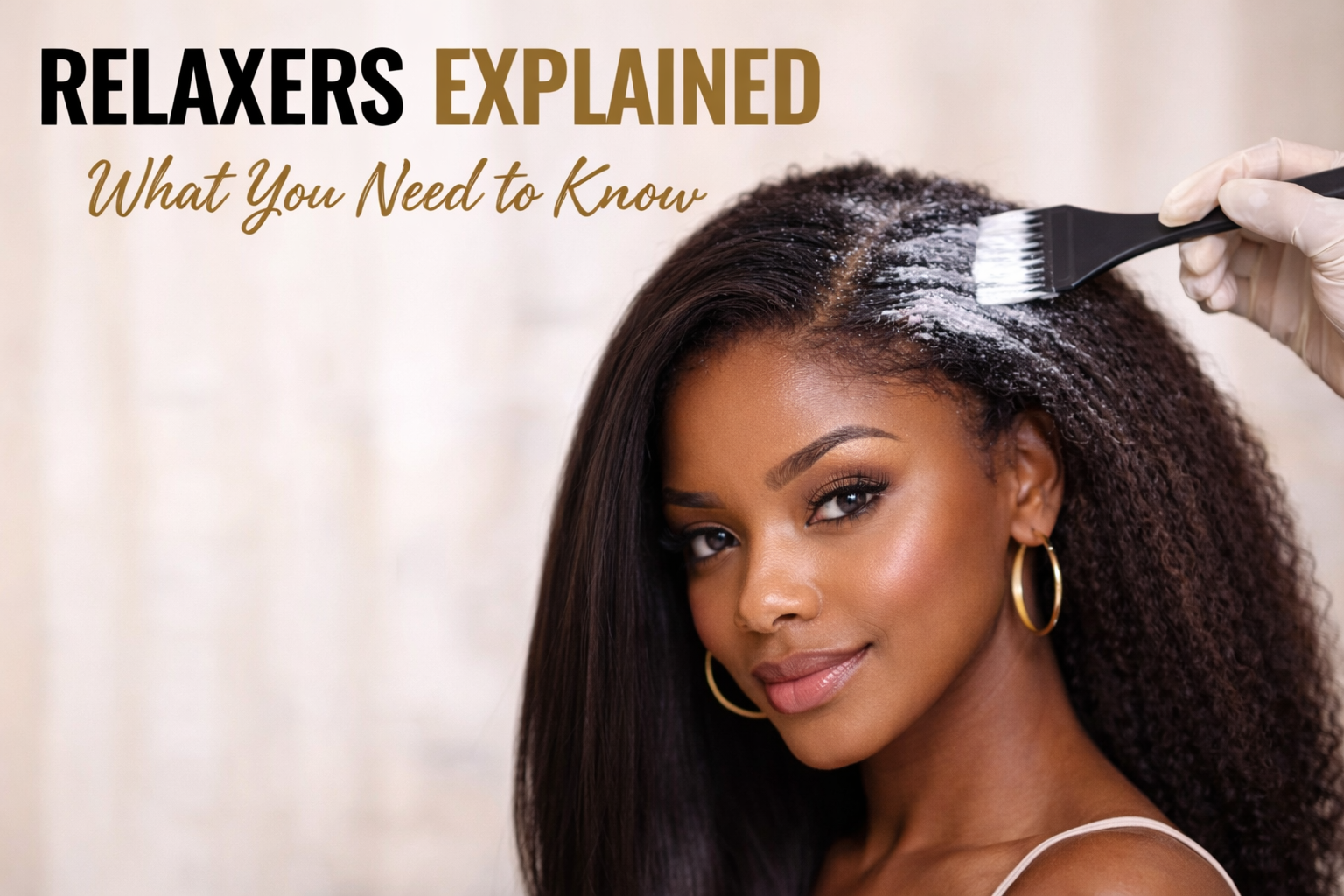
A relaxer is a permanent chemical process that changes the structure of your hair to loosen your curl pattern and create a straighter texture. Once hair is relaxed, it can't go back. New growth always comes in with your natural texture.
That permanence is the most important part of the conversation, and it's often overlooked.
What Does a Relaxer Do to Your Hair?
A relaxer breaks the hair's internal bonds so the strand can be reshaped into a straighter form. That permanently changes:
Your curl pattern
How your hair holds moisture
How your hair responds to heat and styling
How much maintenance it needs
Because the structure of the hair has changed, relaxed hair needs an intentional routine.
Relaxer vs. Keratin or Smoothing Treatment: What's the Difference?
This is where most of the confusion happens.
Keratin and smoothing treatments:
Don't permanently change your curl pattern
Mostly coat and soften the outside of the strand
Wear off over time
Are a temporary way to loosen and smooth texture
Relaxers:
Permanently change the inside of the strand
Require careful new growth management
Can't be reversed
Both are chemical services. One is permanent. One is temporary. Some smoothing treatments also contain ingredients that release formaldehyde when heated, so always ask what's in the product before you book.
For more on how chemical services change your hair, read When Hair Color Changes More Than Just the Shade.
What Are the Pros of a Relaxer?
When it's properly maintained, a relaxer can:
Make styling easier and more predictable
Cut down on daily manipulation
Work well for people who prefer straight styles
Fit some lifestyles better long term
Plenty of women keep long, healthy hair with relaxers because their routine matches their choice.
What Are the Cons of a Relaxer?
Relaxers can also:
Make hair drier if moisture isn't a priority
Need more consistent trims
Be less forgiving if they're overprocessed
Require careful timing and professional application
Damage usually comes from overlapping onto previously relaxed hair, neglect, or poor maintenance, not just the relaxer itself.
How Do You Keep Relaxed Hair Healthy?
Keep touch ups to new growth only. Overlapping is one of the biggest causes of breakage.
Make moisture part of every wash. I like CÉCRED Hydrating Shampoo because it cleans without stripping.
Seal your ends with a few drops of CÉCRED Nourishing Hair Oil.
Stay consistent with trims. Read What Split Ends Actually Are.
Use a heat protectant every time you use heat.
Is It Bad to Get a Relaxer?
No. But it is a commitment.
Your lifestyle, maintenance habits, workouts, and styling preferences matter more than trends. The healthiest hair choice is the one you can maintain consistently.
Thinking about going the other way? Read Transitioning From Relaxed to Natural Hair.
Final Thoughts
Relaxers aren't the enemy. Misinformation is.
Healthy hair is possible on both relaxed and natural journeys when the decision comes from education, not fear.
What I Recommend
The products I trust for moisture and strength, whether your hair is relaxed or natural, are on my Salon Recommended page.
Not sure which direction is right for your hair? Book a virtual consultation.
This post is for educational purposes only and is not medical advice. Hair health can be influenced by hormones, medications, and medical conditions. Consult a licensed professional or healthcare provider for personalized guidance. Some links in this post are affiliate links, and The Press Room may earn a commission.