

Why Your Hair Feels Dry Even When You’re Doing Everything Right
If you’ve ever said, “I use good products but my hair still feels dry,” this is for you.
As a licensed professional, I see this weekly especially with clients who are consistent, intentional, and truly trying to care for their hair. The issue usually isn’t effort. It’s understanding what the hair actually needs.
Here’s the truth most people don’t hear:
Dry hair and dehydrated hair are two different problems.
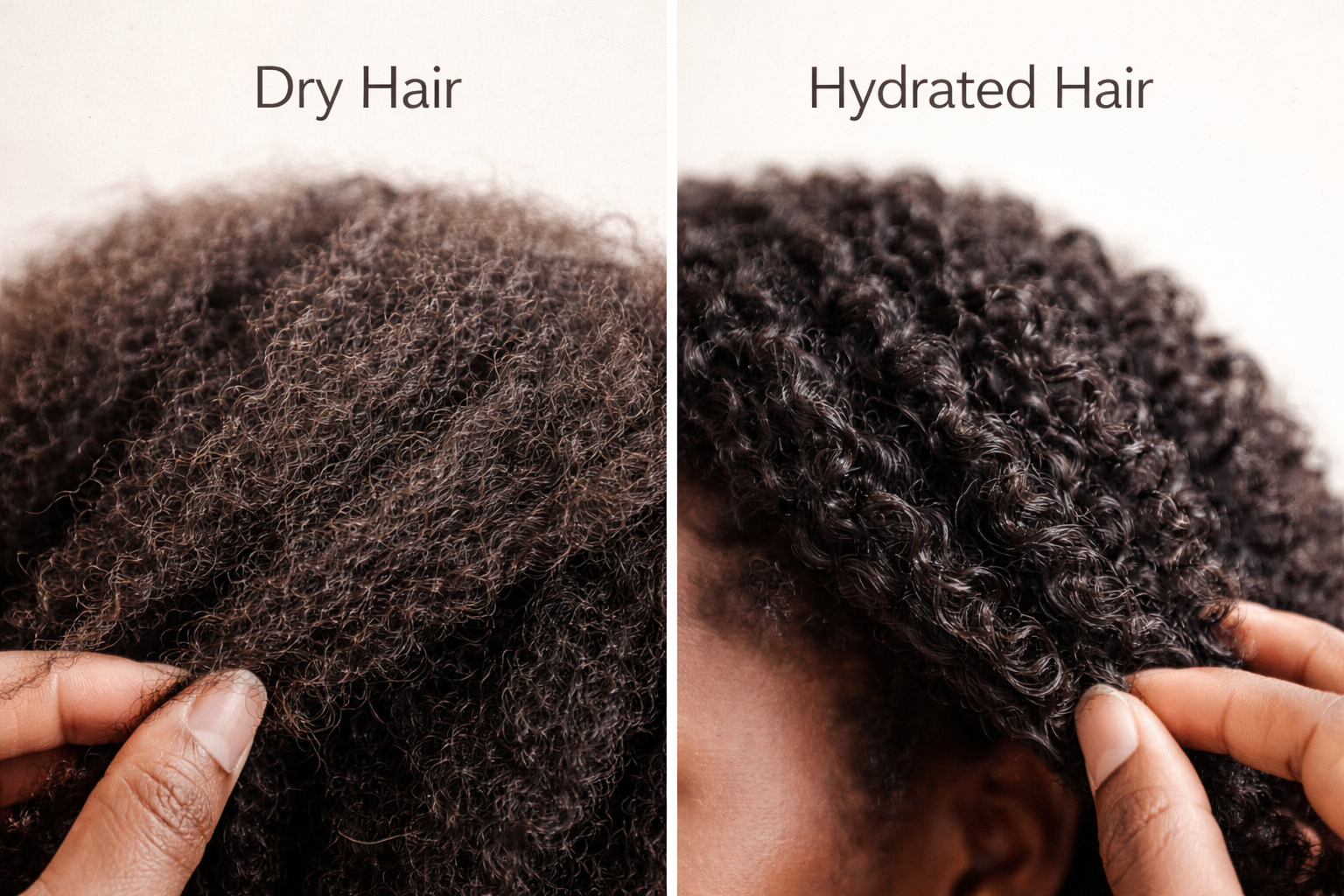
Property of The Press Room Salon
Dry Hair vs. Dehydrated Hair: What’s the Difference?
Dry hair is about oil.
Dehydrated hair is about water.
Hair that lacks oil may feel rough or dull, but hair that lacks water often feels:
Hard or stiff
Brittle even when “moisturized”
Dry shortly after washing
Resistant to products
Unable to hold styles well
Many people respond by adding more oils or butters, which can actually make the problem worse by blocking water from entering the strand.
That’s when hair starts to feel coated instead of nourished.
Why Hair Becomes Dehydrated
Dehydration doesn’t happen overnight. Common contributors include:
Frequent heat styling without adequate hydration treatments
Skipping clarifying or chelating washes
Hard water buildup
Seasonal changes (especially winter and summer extremes)
Low humidity environments
Internal factors like stress or nutritional shifts
Here’s a “wow” moment most clients don’t expect:
Hair can repel water when buildup is present meaning you can wash weekly and still be dehydrated.
That’s usually the missing link.
Signs Your Hair Needs Hydration (Not More Oil)
Water beads up on the hair instead of absorbing
Hair feels dry after conditioning
Products sit on the strand
Hair feels better immediately after washing, then dry again quickly
This is when hydration-focused treatments matter more than adding another product to your routine.
What Actually Helps
Hydration starts with:
A clean foundation – removing buildup so water can enter the hair
Water-based treatments – not just surface conditioners
Balanced sealing – using lightweight oils after hydration, not instead of it
Consistent maintenance – hydration is cumulative, not a one-time fix
This is why in-salon treatments, steam therapy, and hydration-focused regimens often create the biggest transformation not because they’re fancy, but because they address the root issue.
A Gentle Reminder
If your hair feels “off,” it’s not failing you, it’s communicating.
And the solution isn’t always more products. Sometimes it’s better understanding.
If this sounds like what you’re experiencing, I recommend booking a professional assessment so we can determine whether your hair needs hydration, moisture balance, or a reset altogether.
Book your experience when you’re ready.
And as always listen to what your hair is telling you.
— Danie
Licensed Professional | The Press Room Salon
Disclaimer: This content is educational and not medical advice. Always consult a healthcare professional for medical concerns.