

Understanding Cumulative Stress on the Hair Fiber
If you've ever said, "My hair didn't used to do this," you're not wrong.
Hair changes over time, but those changes are almost never random.
One of the biggest misunderstandings I see as a licensed stylist is the idea that hair suddenly becomes "bad," "weak," or "unmanageable." In reality, most hair concerns come from cumulative stress building up on the hair fiber over months or even years.
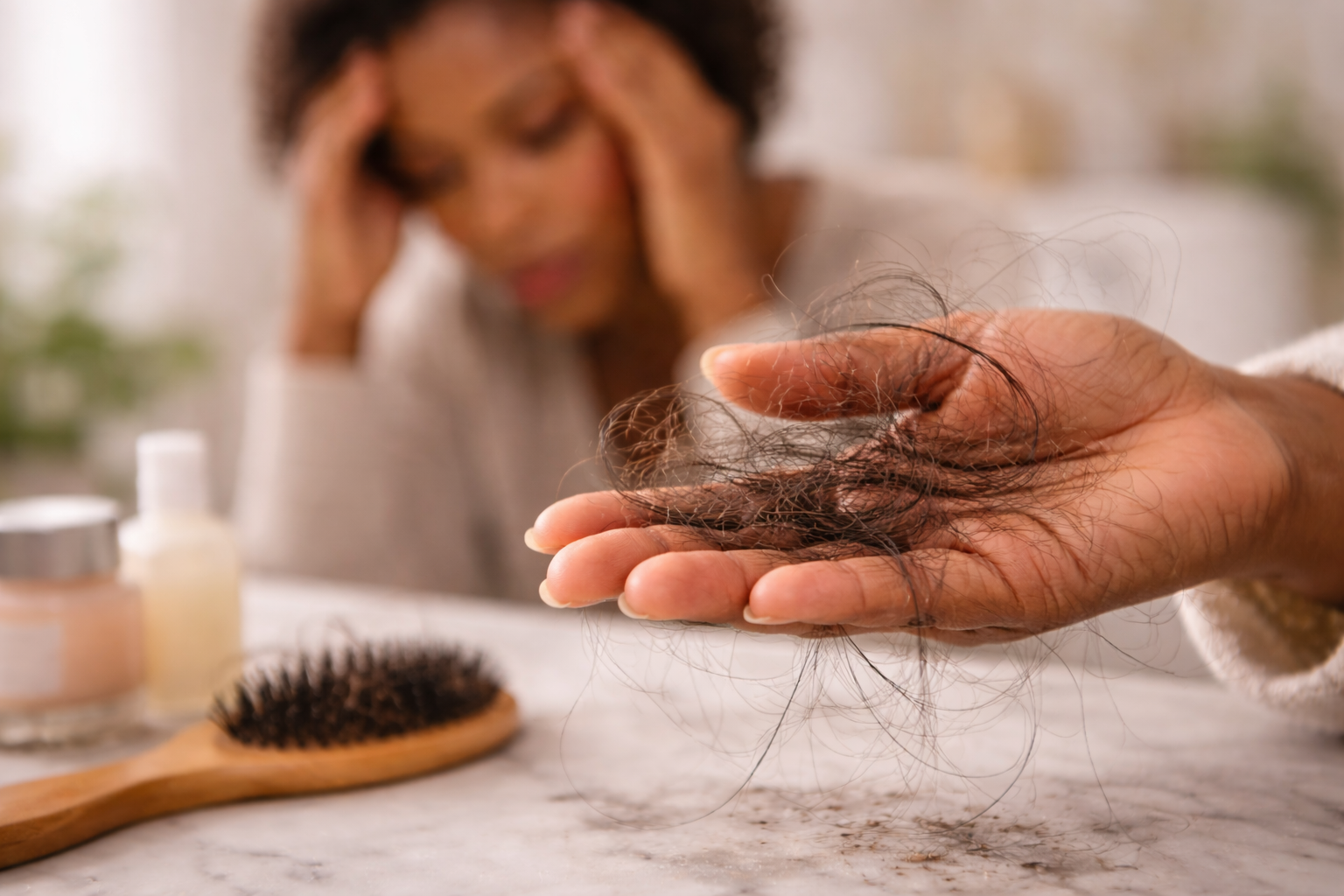
This photo is property of The Press Room Salon
What Is Cumulative Hair Damage?
Cumulative stress is repeated, low-level stress that gradually weakens your hair.
These aren't extreme events. They're everyday habits and conditions that don't seem damaging in the moment but slowly wear down the strand.
Think of it like bending a paperclip. One bend doesn't break it. Repeated bending eventually does.
Hair works the same way.
What Causes Hair Damage Over Time?
Heat
Even when heat is used correctly, frequent flat ironing, blow drying, or curling adds stress to the hair cuticle. Repeated heat exposure is known to weaken the hair's protein structure, which makes breakage more likely. Always use a heat protectant. I use CÉCRED Thermal Shield Mist in the salon.
Tension
Tight styles, repeated ponytails, braids, sew-ins, and even rough detangling can create small damage at the same points along the strand. Read more in Why "Protective Styles" Aren't Always Protective.
Dryness
Hair that stays dry for long periods loses elasticity, so it snaps instead of stretching. Well-hydrated hair handles stress much better than dry hair. A moisturizing cleanse like CÉCRED Hydrating Shampoo and sealing your ends with CÉCRED Nourishing Hair Oil help keep that balance.
Skipped Trims
Split ends don't stop on their own. When trims are put off too long, splits travel up the strand, so it feels like your hair "won't grow" when it's actually breaking faster than it keeps length. Read Why Your Ends Determine Your Length.
Lifestyle and Internal Stress
Hormonal shifts, high stress, nutritional gaps, and seasonal changes can all affect the hair growth cycle, and stress can push hair into the shedding phase early. Read more in When Hair Loss Isn't About Hair Care.
None of these alone are catastrophic. Together, they matter.
Why Hair Damage Seems to Happen Suddenly
Cumulative stress works quietly.
Hair often looks fine until it reaches a tipping point. Once it crosses that point, shedding increases, breakage becomes visible, and styles stop lasting the way they used to.
That's why so many clients feel caught off guard. The damage didn't happen overnight. It just became noticeable all at once.
How to Reduce Hair Breakage and Repair Damage
The answer usually isn't more products. It's consistency:
Balanced moisture and protein
Thoughtful heat use
Protective styles without constant tension
Regular trims based on your hair's needs
Treatments that strengthen the hair, not just coat it
Less friction overnight with a silk or satin pillowcase
When these are handled together, hair often starts responding sooner than people expect.
A Professional Perspective
At The Press Room, I don't look at hair concerns in isolation. Hair responds to how it's treated repeatedly, not occasionally.
When something feels off, your hair is usually signaling long before it fully breaks down. Understanding cumulative stress helps you make choices that support long-term hair health instead of chasing short-term fixes.
What I Recommend
The products I use behind the chair and recommend to my clients for reducing everyday stress on the hair are on my Salon Recommended page.
In Atlanta? Book your silk press or treatment.
This post is for educational purposes only and is not medical advice. Hair shedding, thinning, or changes related to health conditions, medications, or hormones should be discussed with a doctor or licensed medical professional. Some links in this post are affiliate links, and The Press Room may earn a commission. As an Amazon Associate I earn from qualifying purchases.