

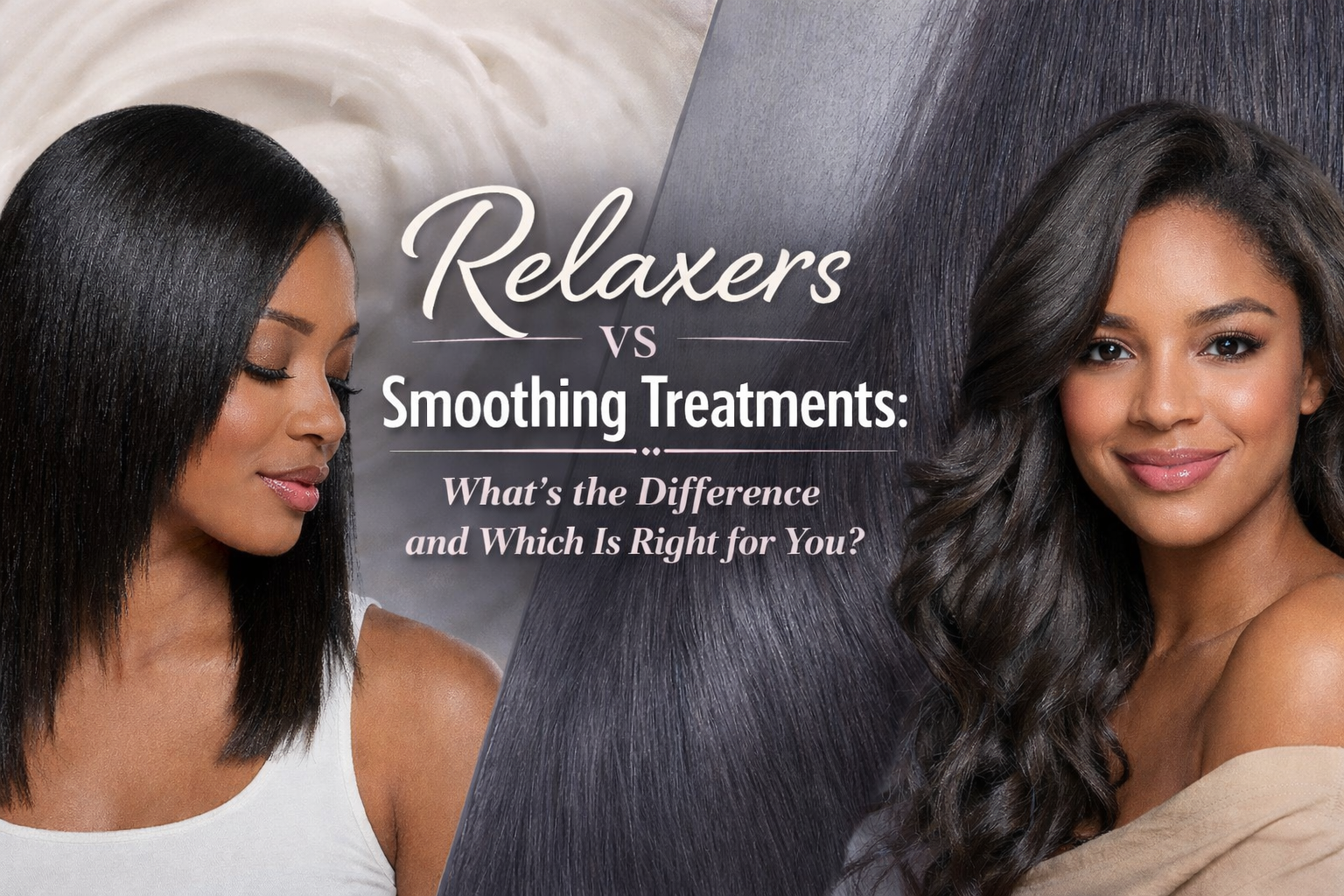
This photo is property of The Press Room Salon
Relaxers and smoothing treatments often get grouped together, but they work very differently. Understanding that difference matters when you're deciding how you want your hair to behave, not just how you want it to look.
Neither option is "bad." Both are valid choices.
The key is making an informed decision.
What Does a Relaxer Do to Your Hair?
A relaxer permanently changes the internal structure of the hair strand. It breaks down your natural curl pattern and reshapes it into a straighter form.
Once hair is relaxed, that change is permanent. New growth comes in with your natural texture and needs touch-ups if you continue the service.
Benefits of a relaxer:
Permanent straightening
Easier daily styling for some clients
Predictable texture
Less manipulation for those who wear their hair straight consistently
Things to consider:
Requires a consistent touch-up schedule
Overlapping relaxer on previously relaxed hair can cause breakage
Relaxed hair needs careful moisture to avoid dryness
Done correctly and maintained properly, relaxed hair can be healthy, strong, and beautiful. For a deeper look, read Relaxers Explained: What They Are, What They Aren't, and What That Choice Really Means.
What Does a Keratin or Smoothing Treatment Do?
Smoothing treatments temporarily smooth the hair and loosen the curl pattern, mostly at the surface, without permanently changing the hair's internal structure. They gradually wear off over time.
Benefits of a smoothing treatment:
Less frizz
Easier to manage
A temporarily looser curl pattern
A shorter commitment than a relaxer
Things to consider:
Results aren't permanent
Your natural curl pattern returns gradually
Heat is usually needed to activate the treatment
Clients often choose smoothing treatments when they want flexibility and less long-term commitment.
Relaxer vs. Keratin Treatment: The Key Difference
A relaxer is a permanent chemical change. A smoothing treatment is a temporary chemical process.
Both involve chemistry. Both affect your hair differently. Neither should be chosen lightly or on impulse.
How to Choose Between a Relaxer and a Smoothing Treatment
The right choice depends on:
Your lifestyle
How often you style your hair
How much maintenance you're willing to keep up with
Your long-term hair goals
Whether you're open to growing out your natural texture later
There's no universally better option. There's only what works best for you. If you're thinking about moving away from a relaxer, read Transitioning from Relaxed to Natural Hair: What the Process Really Looks Like.
Why Professional Guidance Matters
As a stylist, my role is to help you understand how each service works with your hair specifically. What works beautifully for one client may not suit another at all.
Healthy hair isn't about avoiding chemicals. It's about using them responsibly, intentionally, and with the right aftercare, including consistent moisture with a gentle cleanse like CÉCRED Hydrating Shampoo and sealed ends with CÉCRED Nourishing Hair Oil.
The Takeaway
Relaxers and smoothing treatments are tools, not rules.
When you understand what each one does and what it requires, you can choose confidently instead of reactively. That's when your hair decisions start working with you, not against you.
What I Recommend
The products I use behind the chair and recommend to my clients for chemical service aftercare are on my Salon Recommended page.
Not sure which is right for you? Book a Pre-Service Virtual Consultation, or if you're in Atlanta, book your service.
This post is for educational purposes only and is based on professional experience as a licensed hairstylist. It is not intended to diagnose, treat, or replace medical advice. For medical concerns, consult a qualified healthcare provider. Some links in this post are affiliate links, and The Press Room may earn a commission.