

Common Scalp Disorders That Can Affect Hair Growth
And When to See a Dermatologist or Trichologist
When hair growth feels slow, inconsistent, or unpredictable, the scalp is often the missing piece of the conversation.
The scalp is living skin. When its function is compromised, hair follicles cannot perform at their best. While some scalp concerns can be supported through professional hair care, others require medical evaluation.
Understanding the difference matters.
Why Scalp Disorders Impact Hair Growth
Hair grows from follicles that rely on:
Healthy blood flow
Balanced oil production
Minimal inflammation
Clear follicle openings
When the scalp environment is disrupted, follicles may:
Enter the resting phase too early
Produce thinner or weaker strands
Shed more frequently
Struggle to retain length
This is why scalp concerns should never be ignored or treated casually.
Most Common Scalp Disorders Clients Experience
Seborrheic Dermatitis (Dandruff Related)
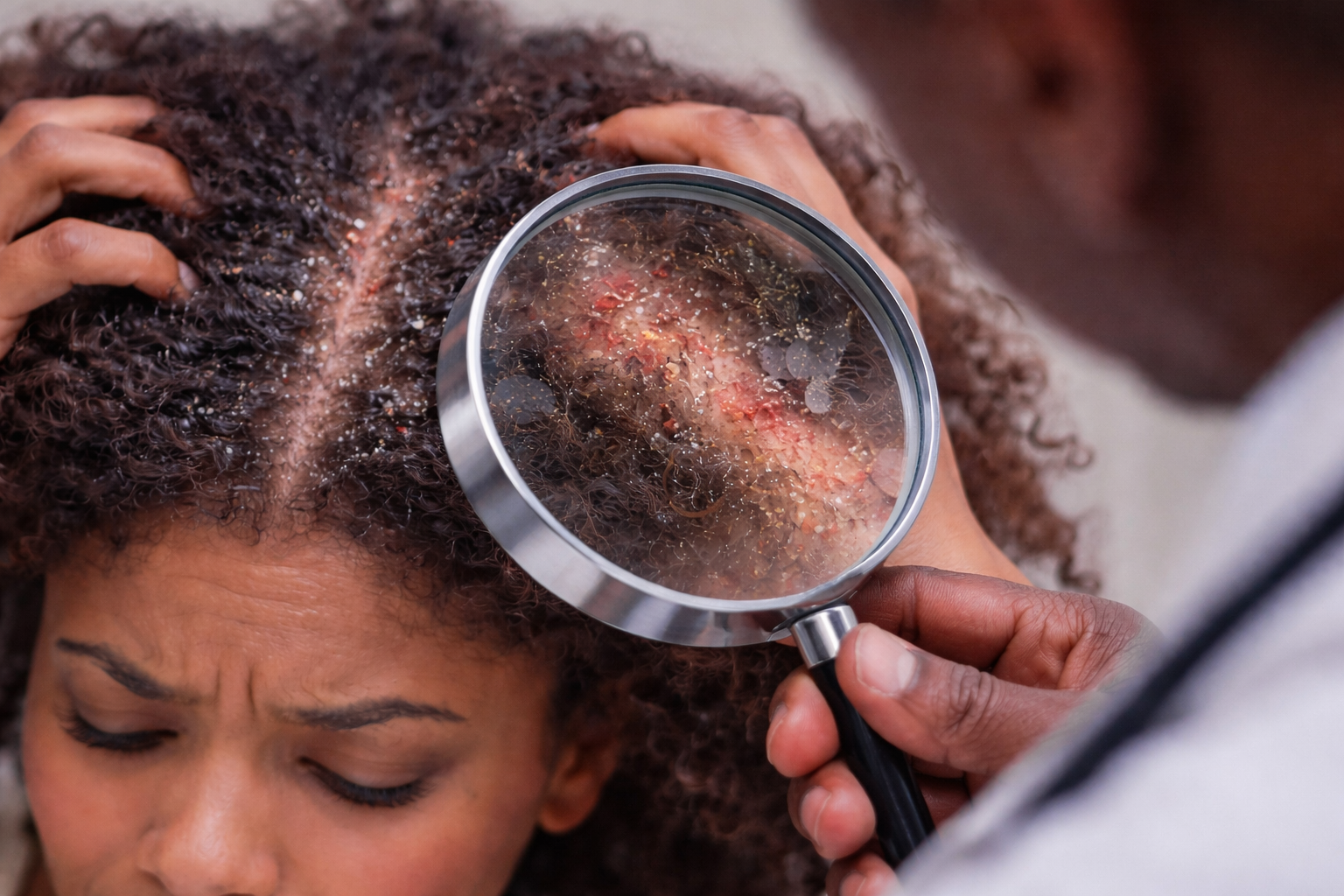
This condition is often linked to yeast overgrowth on the scalp and presents as:
Persistent flaking
Greasy or waxy scales
Redness or irritation
Adding oils or avoiding cleansing can worsen this condition rather than improve it.
Psoriasis
Psoriasis is an autoimmune condition that causes rapid skin cell turnover.
On the scalp, it may appear as:
Thick, silvery scales
Patches that extend beyond the hairline
Persistent irritation or soreness
Psoriasis requires medical diagnosis and treatment. Hair care alone cannot resolve it.
Chronic Scalp Inflammation
Inflammation may result from:
Repeated tension
Harsh products
Untreated scalp conditions
Excessive buildup
Over time, inflammation interferes with follicle function and can contribute to shedding and thinning.
Follicle Blockage and Buildup
Heavy product use, infrequent cleansing, or excessive oils can clog follicles.
Blocked follicles limit the scalp’s ability to support healthy growth and can lead to dullness, breakage, and increased shedding.
What a Stylist Can Support
As a licensed stylist, I can:
Identify visible scalp concerns
Adjust cleansing and maintenance routines
Recommend professional scalp treatments
Modify styling practices to reduce irritation
However, stylists do not diagnose medical conditions.
When to See a Dermatologist or Trichologist
You should seek medical evaluation if you experience:
Persistent itching or burning
Thick scaling that does not improve
Redness, swelling, or pain
Hair loss associated with scalp discomfort
Symptoms that return quickly after treatment
A dermatologist can diagnose and treat medical scalp conditions.
A trichologist specializes in scalp and hair disorders and can provide deeper analysis of follicle health.
Hair growth concerns often require collaboration.
The Takeaway
Not every scalp issue is cosmetic.
Not every solution is a product.
When the scalp is unhealthy, hair growth and retention will always be affected. Addressing scalp concerns early, and involving the right professionals when needed, supports better long-term outcomes.
Important Disclaimer
This blog is for educational purposes only and is not medical advice. Scalp conditions may be influenced by health, genetics, hormones, medications, or autoimmune disorders. Always consult a licensed dermatologist or trichologist for diagnosis and treatment.
For professional scalp assessments and personalized hair care guidance, visit:
www.thepressroomsalon.com