

Hair Shedding vs. Breakage: What’s Actually Happening and Why It Matters
If you’ve noticed more hair in your hands, on your clothes, or in the shower lately, you’re not alone.
This is one of the most common concerns I hear in the salon and almost every time, the same question comes up:
“Is my hair breaking… or am I shedding?”
Those two things are not the same and understanding the difference can completely change how you care for your hair moving forward.
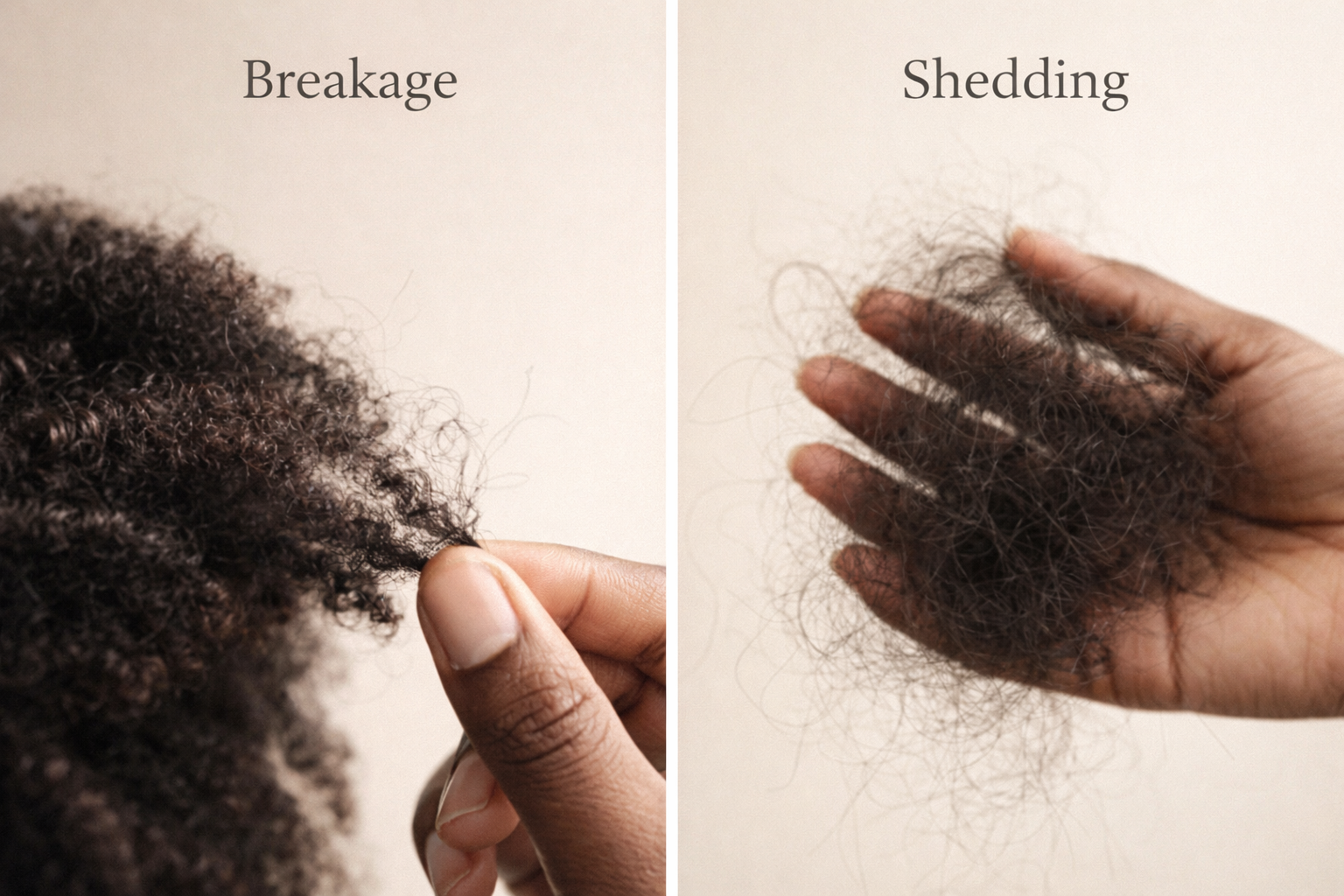
Shedding and Breakage Are Often Confused — Here’s Why
To the untrained eye, hair loss just looks like… hair loss.
But from a professional standpoint, shedding and breakage come from very different causes, and they require different approaches.
When we skip this distinction, people often end up:
Overcorrecting with products
Avoiding heat unnecessarily
Or blaming their stylist when the issue is internal
At The Press Room, this is always one of the first things we assess.
What Hair Shedding Actually Is
Shedding is part of the natural hair growth cycle.
Each strand of hair goes through three phases:
Growth (anagen)
Transition (catagen)
Resting + release (telogen)
When a strand reaches the end of its cycle, it releases from the scalp that’s shedding.
Here’s a “wow” fact most people don’t know:
Research shows it’s normal to shed 50–100 hairs per day, and sometimes more during:
Seasonal changes
High stress periods
Hormonal shifts
Postpartum
Perimenopause / menopause
Shedding hair usually has a white bulb at the end a sign it released from the scalp, not snapped off.
Shedding doesn’t mean your hair isn’t growing.
It means old hair is making room for new hair.
What Hair Breakage Actually Is
Breakage happens when hair snaps along the strand, not at the root.
This is usually related to:
Dryness or lack of moisture balance
Over-manipulation (constant styling, tight styles, excessive brushing)
Heat misuse or overuse
Skipping trims
Chemical or color stress
Broken hairs are typically:
Short
Uneven
Missing the bulb at the end
This is where retention becomes the issue not growth.
Growth vs. Retention (Another Thing Most People Don’t Realize)
This is another big “aha” moment in the chair.
You can have normal hair growth and still struggle to see length.
Why?
Because retention keeping the hair you grow depends on:
Moisture balance
Consistent trims
Gentle handling
Realistic styling timelines
Everyone’s hair is not meant to be waist-length and that’s okay.
Healthy hair looks different on different people.
Why the Distinction Matters
This is the part I really want people to understand:
If you’re shedding, the solution isn’t always:
More products
Less heat
Panic
And if you’re breaking, the solution isn’t always:
Protective styles
Leaving hair alone indefinitely
Sometimes the solution is:
Adjusting your maintenance schedule
Adding targeted treatments
Being consistent with trims
Or simply understanding what your hair is actually doing
Hair responds to patterns, not quick fixes.
A Note on Internal Factors (Without Diagnosing)
As a licensed professional, I don’t diagnose but I do observe patterns.
Excessive or prolonged shedding is often associated with things like:
Low iron
Low vitamin D
Low B12
Hormonal shifts
Chronic stress
This is why, when shedding feels persistent or sudden, I always encourage clients to loop in a medical professional or dermatologist for proper evaluation.
Healthy hair starts with a healthy scalp and sometimes that requires support beyond the salon.
So… What Should You Do Next?
Here’s a simple starting point:
If the hair is long with a bulb: likely shedding
If the hair is short and uneven: likely breakage
From there:
Be honest about how often you trim
Revisit how much manipulation your hair is experiencing
Pay attention to dryness vs softness
And don’t ignore patterns your body may be showing you
When Products and Treatments Can Help
In cases of breakage or dryness, I often recommend:
Professional deep conditioning or protein-moisture balanced treatments
Steam treatments to improve hydration
Thoughtful product choices that support moisture without buildup
Product recommendations should support the problem not replace understanding it.
Final Thought
Healthy hair isn’t about doing everything.
It’s about doing the right things consistently.
When you understand whether you’re shedding or breaking, your entire approach to hair care becomes clearer and much less stressful.
Disclaimer: This content is educational and not medical advice. If you’re experiencing ongoing or excessive hair loss or scalp concerns, consult a licensed healthcare provider or dermatologist.
If this topic resonated with you and you’d like help assessing what your hair needs right now, you can book your experience > www.ThePressRoomSalon.com